
Exploring Non-Surgical Treatment Options for Herniated Discs, Sciatica, and Chronic Back Pain in Tulsa
When back pain becomes severe, persistent, or begins traveling down your leg, one of the biggest concerns patients have is whether they will eventually need surgery.
For some people, surgery is necessary. But for many others, conservative treatment is an appropriate first step.
If you’ve been diagnosed with a herniated disc, sciatica, or certain types of chronic back pain, you may have more treatment options than you realize.
At Keith G. Ryan Chiropractic, PLLC, in Tulsa, Oklahoma, we help patients explore conservative approaches to spinal pain, including non-surgical spinal decompression.
Does a Herniated Disc Always Require Surgery?
No. In fact, many people with lumbar disc herniations improve without surgery.
An intervertebral disc acts as a cushion between the bones of the spine. When part of the disc protrudes or herniates, it may irritate or compress a nearby spinal nerve.
Depending on the location and severity, symptoms may include:
- Lower back pain
- Pain traveling into the buttock or leg
- Numbness or tingling
- Burning or electric-like sensations
- Difficulty sitting or standing comfortably
- Muscle weakness in some cases
Although these symptoms can be frightening, a herniated disc does not automatically mean surgery is required.
The appropriate treatment depends on the patient’s symptoms, neurological findings, imaging when indicated, and response to conservative care.
What Is Non-Surgical Spinal Decompression?
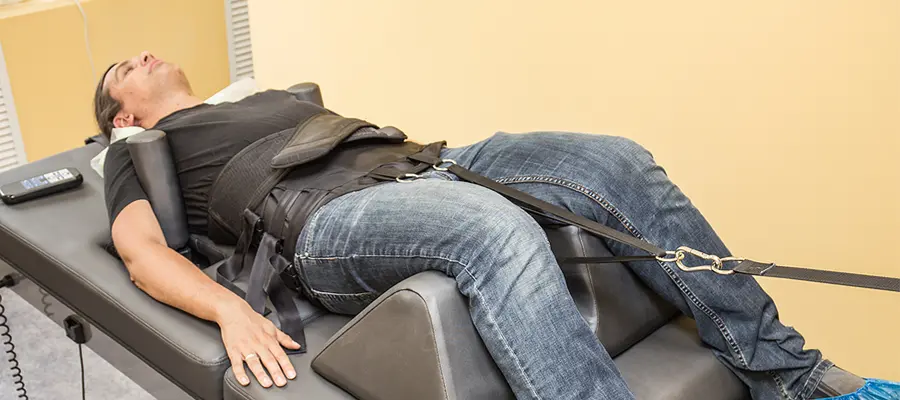
Non-surgical spinal decompression is a form of motorized traction that applies controlled pulling forces to the spine.
The treatment is intended to temporarily reduce mechanical loading on spinal structures and may provide symptom relief for selected patients.
At Keith G. Ryan Chiropractic, we use the Kennedy KDT spinal decompression system for cervical and lumbar treatment.
The system allows us to adjust treatment parameters based on the patient’s condition and tolerance.
Spinal decompression is non-invasive and does not require surgical incisions or anesthesia.
However, it is important to understand that decompression is not appropriate for every spinal condition, and scientific evidence regarding its effectiveness remains mixed.
How Might Spinal Decompression Help Disc-Related Pain?
Spinal decompression is designed to apply controlled traction to the spine.
For certain patients, this may help reduce discomfort associated with mechanical loading and nerve irritation.
Potential goals of treatment include:
- Reducing pain associated with certain disc conditions
- Improving tolerance for movement and daily activities
- Supporting participation in exercise and rehabilitation
- Providing a conservative treatment option before considering more invasive procedures
It is sometimes claimed that decompression can pull a herniated disc back into place. However, that outcome cannot be reliably promised, and research has not established that traction consistently reverses disc herniations.
Our focus is on the patient’s symptoms, function, and response to treatment rather than making unrealistic promises.
Can Spinal Decompression Actually Prevent Surgery?
This is an important distinction.
Some patients improve with conservative treatment and never require surgery. However, that does not mean spinal decompression itself has been proven to prevent surgery.
Many patients with disc-related pain improve over time with a combination of appropriate activity, exercise-based rehabilitation, medications when indicated, and other conservative measures.
Spinal decompression may be considered as an additional treatment for selected patients, but its effectiveness varies.
The goal is to determine whether a reasonable, monitored trial of conservative care is appropriate before pursuing more invasive options.
Who May Be a Candidate for Spinal Decompression?
Patients who may be considered for decompression include those experiencing:
- Certain types of disc-related lower back pain
- Selected cases of sciatica
- Some cervical disc-related symptoms
- Persistent mechanical spinal pain that has not responded adequately to initial care
A thorough history and examination are necessary before recommending treatment.
Patients with certain conditions, including spinal instability, fractures, tumors, infections, or significant neurological compromise, may not be appropriate candidates.
When Is Surgery the Better Option?
Although non-surgical care is often considered first, there are situations where delaying surgical evaluation could be harmful.
Seek immediate medical attention for symptoms such as:
- New loss of bladder or bowel control
- Numbness in the groin or saddle region
- Severe or rapidly worsening leg weakness
These symptoms may indicate serious nerve compression requiring emergency evaluation.
Surgical consultation may also be appropriate when significant neurological deficits are present or when disabling symptoms persist despite an adequate course of conservative treatment.
The objective should always be the best outcome for the patient, whether that involves conservative treatment or surgery.
Why We Combine Decompression With Other Conservative Therapies
At Keith G. Ryan Chiropractic, PLLC, we recognize that spinal pain often involves more than one contributing factor.
Depending on the patient’s condition, treatment may incorporate:
Spinal Decompression: Controlled mechanical traction intended to reduce spinal loading and potentially improve symptoms.
Chiropractic Care: Appropriate joint-focused treatment to address selected mechanical problems involving spinal movement and function.
3B Cold Laser Therapy: A non-invasive treatment sometimes used to help manage musculoskeletal pain. Evidence varies by condition, and it should not be considered a replacement for necessary medical care.
Exercise and Activity Guidance: Recommendations intended to improve mobility, strength, and long-term function.
Not every patient requires every therapy. Treatment decisions should reflect the diagnosis, examination findings, and individual goals.
How Long Does Spinal Decompression Take?
Treatment schedules vary depending on the condition, severity of symptoms, and response to care.
Some patients notice changes early, while others require a longer trial before meaningful improvement can be assessed.
We monitor progress and reassess whether continued treatment is appropriate.
If symptoms worsen or meaningful improvement does not occur, the treatment plan should be reconsidered.
Looking for Non-Surgical Spinal Decompression in Tulsa?
If you’re experiencing persistent back pain, sciatica, or symptoms associated with a herniated disc, it may be worth exploring whether conservative care is appropriate for your condition.
At Keith G. Ryan Chiropractic, PLLC, we’ve been helping Tulsa-area patients manage spinal and musculoskeletal problems for more than 30 years.
Our approach begins with understanding your symptoms, reviewing relevant findings, and determining whether spinal decompression or another treatment option is appropriate.
Learn more about our spinal decompression therapy in Tulsa and chiropractic care in Tulsa or call 918-742-6262 to schedule an appointment or request an appointment online.
This article is educational and does not replace individualized medical evaluation. Treatment results vary, and no non-surgical therapy can guarantee that surgery will be avoided.
Photo Credit: DedMityay/Bigstockphoto.com
